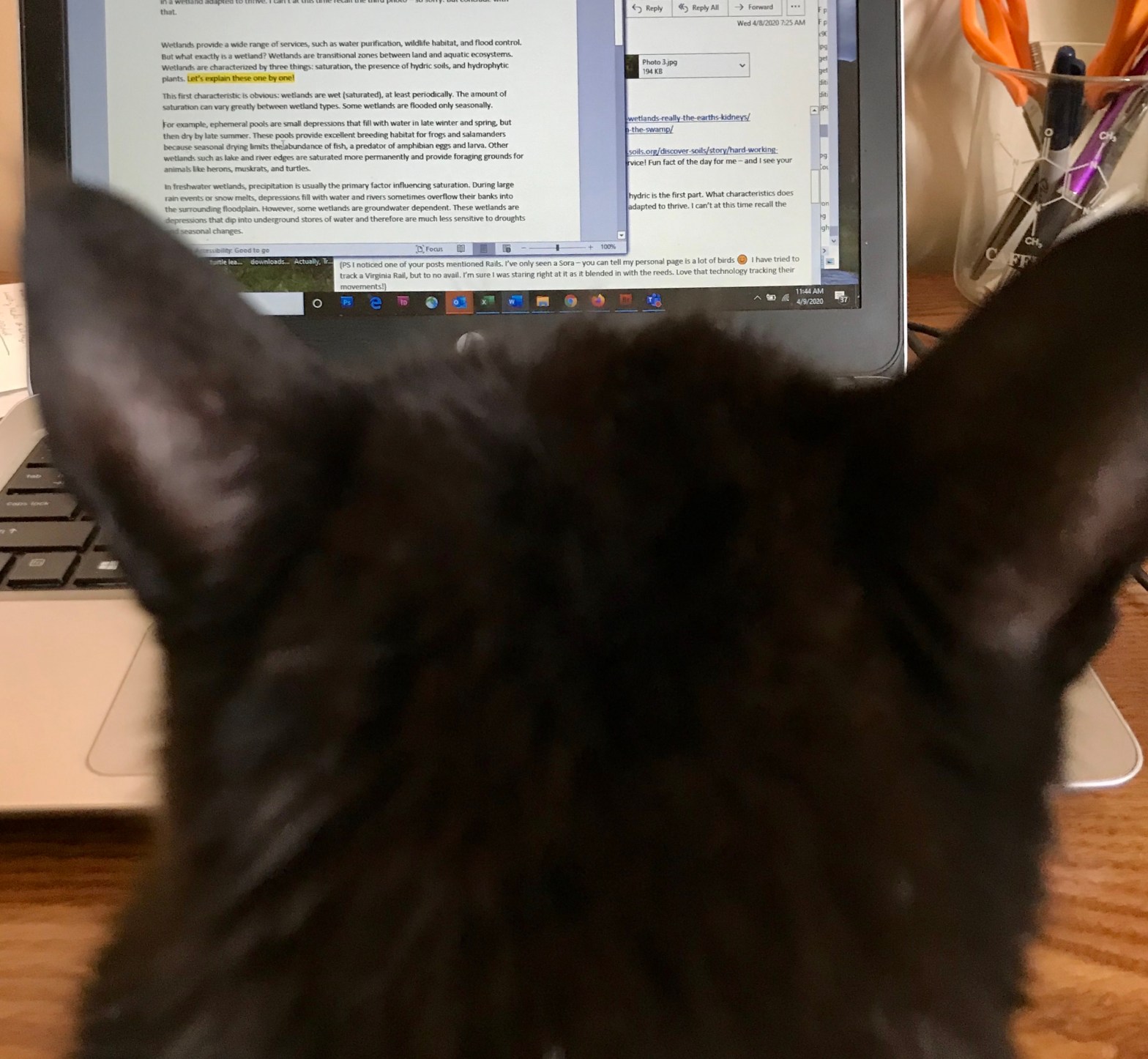
Have you ever tried to talk about your work to family or friends – only to get yawns? These are the same people taking time to watch one or more of the two million cat videos on the internet, right?
It’s truly aggravating isn’t it?
Comparing the attention span for silly entertainment and that of an important scientific topic isn’t fair. Watching cat videos doesn’t take much brain power but listening about science does. I don’t think we’ll ever know why cat videos are so popular…but I do think scientists can come closer to competing with these pesky videos.
So, what can scientists learn from the success of cat videos?
Here are some tips:
- Cat videos are short. They are just a few minutes. Do you have a simple, first sentence (your lead) that explains the importance of your work? Can you explain your research in fifty words or less? Three minutes? If not, try writing down some ideas. Create a compelling lead sentence with “Did you know?”
- Cat videos are simple. Make sure that your explanation doesn’t have any “jargon” in it – terms that scientists use but are not common for the public.
- Cat videos are relatable. Do you have an analogy for your work? It really helps start the conversation at a shared value or understanding. Many scientists have come up with excellent analogies for their research. Let’s also remember that most of the public is learning about science breakthroughs as part of their infotainment – which is why we need to work on our message so much.
- Cat videos are uplifting. Be sure to bring up your positive findings in the first sentence – and what the impact to your audience is. In the case of severe problems that need to be solved, and don’t yet have a solution, you can make your message more positive by stating “my work is important because we might be able to prevent or lessen this problem?” The way you deliver your message will also help bring an uplifting edge to your conversation. Leading with the solutions you may find makes your message more hopeful.
- Cat videos are funny. This is a tough one. But, truly, we can be much more lighthearted in our communications. When the movie, The Martian, came out, I worked with a group of crop scientists to develop a news release promoting beans as an alternative to the potatoes Matt Damon’s character was subsisting on (fun fact, you can eat all of the bean plants!) One of the team even went on public radio for an interview about beans, with a rallying cry “send Mark Watney some beans.” Many scientists are successfully bringing their science into bars with a platform called Nerd Night. Check here if there is a group in your area.
I think there is a place in this world for (limited) mindless entertainment like cat videos. If you disagree, why not look up this video that has over 88 million views (5/23/21): https://www.youtube.com/watch?v=5dsGWM5XGdg. I know that the work of scientists is critical, so copying some of the above techniques can be helpful communications tools.
Written by Susan V. Fisk, BS(Chem), M.Ed., MBA. Copyright by author. @susanvfisk (Twitter, IG) Be sure to subscribe to my blog to get the latest updates, and check the “audience” category of the blog to learn why communications in general is hard. Thank you for reading!
Communicating so people understand (Readability)
Do you want more help with your science communications? Contact me at TrulyRelatableScience@gmail.com for estimates on editing your professional web pages, public presentations, grant proposals, or to Zoom into your classroom/lab for a workshop!
 Relatable Science